

The global rise of Korean cinema
By Nikki Babri
In the fall of 2003, Joseph Jonghyun Jeon was serving as a juror at the San Diego Asian Film Festival when a Korean film called Memories of Murder screened for its U.S. premiere. He left the theater knowing he had seen something remarkable, though he couldn’t yet say exactly what.
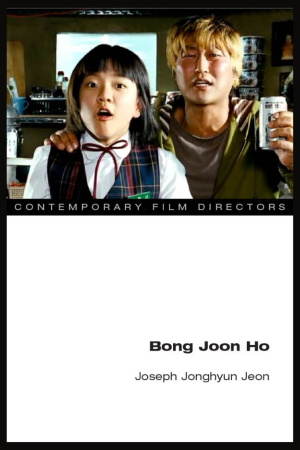
That evening marked the beginning of a twenty-year project for the UC Irvine professor of English. The result is Bong Joon Ho (University of Illinois Press, 2024), a comprehensive study of the director’s entire filmography. The book has been recognized by South Korea’s Ministry of Education as one of the top 50 research achievements in Korean studies for 2025.
Jeon, who also directs UCI’s Center for Critical Korean Studies, is the third UCI faculty member to receive the award, after colleagues Kyung Hyun Kim, professor and chair in East Asian studies, and Eleana Kim, professor in anthropology. “It’s a great honor,” he shares. “I am proud to join their company.”
That the Korean Ministry of Education award has come to UCI three times is not, Jeon suggests, a coincidence. “I think UCI fosters a community for Korean studies scholarship that is both rigorous and creative,” he says. “There is a wide range of excellent work done at UCI in Korean studies and this makes it an ideal incubator for more scholarship.”
The power of timing
After that first screening, Jeon followed Bong’s career closely, seeing each new film as soon as it premiered and regularly revisiting Bong’s earlier work. By the time he was approached by editors of University of Illinois Press in 2018 to write this book, Bong had already built a venerable reputation with films like The Host, Snowpiercer and Okja. Jeon told the editors it wasn’t the right time; he wanted to see Bong’s career take a clear shape before starting the project.
He didn’t have to wait long. With Parasite (2019), Bong won the Cannes Palme d’Or and four Oscars at the Academy Awards, including Best Picture, making it the first non-English-language film to win in that category. The film’s success contributed to a broader shift in the visibility of Korean cinema and culture in the U.S. Streaming platforms invested heavily in Korean dramas while Korean music, food and fashion entered the mainstream.
“When Parasite hit, I felt that his career had formed a clear arc,” Jeon explains. “I told the editors that it was time.”
Modern Korea on screen
Jeon’s book examines the themes and techniques that run across Bong’s body of work. At its core is an argument about geography as a framework for understanding power and identity. “Bong Joon Ho’s films are self-conscious about the geographies of experience that have shaped modern Korean and indeed global life,” Jeon explains. “Insofar as geography helps us think about spatial relations and about the networks of power and influence that flow through them, Bong’s films help us track these relations, networks and flows.”
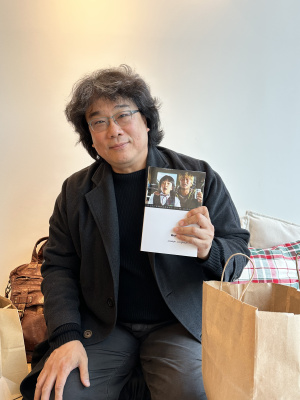
This geographic consciousness, Jeon believes, is not a stylistic quirk but a reflection of South Korea’s modern experience. Earlier in Bong’s career, his films grappled with Korea’s rapid, U.S.-fueled modernization and its social costs. Later works turn toward the entanglements of globalization.
“Korea went from being one of the poorest countries in the world to one of the wealthiest in a relatively short period of time,” Jeon says. “This was of course a salutary development, but one that came with a lot of costs as well. Bong’s films think through the later part of this development arc and its discontents.”
That reckoning with capitalism runs through Bong’s films in concrete, often darkly comic ways. In scene after scene, characters handle cash in ways that reveal exactly who they are and where they stand. “My films…are stories about money, and inevitably money is something that controls all of us,” Bong told Jeon. “We don’t want to be under money’s control, but it’s almost inevitable.”
For Jeon, Bong stands apart from his contemporaries not because he transcends the conditions that shaped him, but because of how fully his films reflect them. “His films balance filmmaking artistry, social commentary and entertainment,” he says. “They are thoughtful works, but they are also interesting, engaging and often fun.” Although Bong is “arguably the most acclaimed Korean director,” Jeon stresses that his success is inseparable from the rich filmmaking environment that has been developing in South Korea since the 1960s, one that includes many lesser-known directors and films equally worth attention.
In conversation with the director
An in-depth interview with Bong himself rounds out the book. Jeon conducted the interview in January 2021, with Parasite translator Sharon Choi providing real-time interpretation between California and Seoul.
“I was taken aback by the way he thought about natural elements in his films, like fire and water,” Jeon recalls. “About how one of his greatest ambitions in his filmmaking was to control water. The scene of torrential rain in the middle of Parasite is probably the most famous example, but there are also a lot of other, more subtle instances.”

Bong spoke at length about the long opening take in Memories of Murder, set at a muddy 1980s crime scene already being trampled by oblivious officers. The scene, he explained, was inspired by a local news reporter who covered the real case and described arriving to find nothing but a chaos of footprints. “I want my films to feel very physical rather than conceptual,” Bong shared. “I want it to almost damage the viewers physically.”
He designed the scene as a single unbroken take so that audiences feel like they are witnessing the chaos of that era in real time. For Jeon, it is a clear example of Bong’s ability to pull viewers out of the present and immerse them within a particular moment in Korean history.
The future of Korean studies

The book was supported in part by the Core University Program for Korean Studies through South Korea’s Academy of Korean Studies, as well as by a grant from the UCI Humanities Center. In 2021, the Center for Critical Korean Studies received two prestigious grants from the Korea Foundation and the Academy of Korean Studies totaling more than $1 million to support faculty and student research and public programming. “We are very grateful for this support,” Jeon says.
Jeon is already at work on his next book, examining what it means that the rise of Korean Wave culture coincides with the powerful antiglobalist sentiments that have become pervasive in recent years.
He has seen each of Bong’s films a minimum of twenty times each and still finds himself going back. His favorite remains Memories of Murder, the film that started it all. “I still remember that feeling when the movie was over and the credits rolled,” he says. “The combination of dramatic intensity, historical inquiry and humor mixed in as well – I had never seen anything like it.” Decades later, the film – and the director – still have his full attention.
Interested in reading more from the School of Humanities? Sign up for our monthly newsletter to read more.