
The Lunar New Year marks one of East Asia’s most significant cultural celebrations, a time when families gather to honor tradition, welcome good fortune and bid farewell to the past year’s challenges. 2026 brings the Year of the Fire Horse, an astrological rarity that occurs only once every sixty years. In traditional Chinese cosmology, this alignment has been viewed as a period of transformation and volatility, as the naturally yang element of fire combines with the horse, an animal already associated with intense energy and movement in the zodiac cycle.

Professor of East Asian Studies Hu Ying explores the cultural significance of this rare convergence and its historical associations with periods of dramatic change.
Welcoming the Year of the Horse
The Year of the Horse begins on February 17, 2026. Across East Asia, the Lunar New Year — known as Chunjie in China, Tết in Vietnam and Seollal in Korea — is a time of bustling activities.
Days before the New Year, trains, planes and the roads are packed with people traveling long distances to get back to their ancestral homes. The day before the New Year, every household conducts a massive-scale cleaning, “sweeping away misfortunes,” a practice rooted in beliefs that doing so cleanses homes of negativity to welcome the new year. On New Year’s Eve, everyone will have made it home for an elaborate “reunion” feast, and fire-crackers can be heard throughout the night. Bright and early on the first morning of the New Year, Buddhist temples are swathed in sweet incense smoke and the sound of prayers; and every home’s doorway sports freshly pasted couplets.
For the next fifteen days (or at least three or seven days for the moderns), friends and relatives visit one another and give well wishes. Most important for children, this is the time when they receive from their elders red envelopes (hongbao) filled with money. This year, the envelopes are likely printed with the proverb “Ma Dao Gong Cheng” (“May success arrive as fast as the horse’s hoof”).
Seventh in the zodiac of twelve animals, the horse is a symbol of speed, grace and boundless energy. Opening an ancient Chinese text, you’ll encounter a dizzying array of terms for all kinds of horses: a bay horse is a hua, a blue roan is a xuan, a pinto colt is a taohua ma (horse of peach-blossoms), a steed of speed and endurance is a ji and so on.
In The Book of Songs, the oldest collection of Chinese poetry, you’ll find verses like, “Holding the reins like a woven ribbon, the two horses along the chariot dance in rhythm,” a couplet that captures the elegance of equine movement. The great 8th century poet Du Fu praised the steed as “a creature of wind, unshackled by earth.” Thus did writers turn mythic equines into metaphors for human aspiration.
Fire over fire
But the 2026 Horse is not just any horse. It is the Fire Horse which comes only once every sixty years.
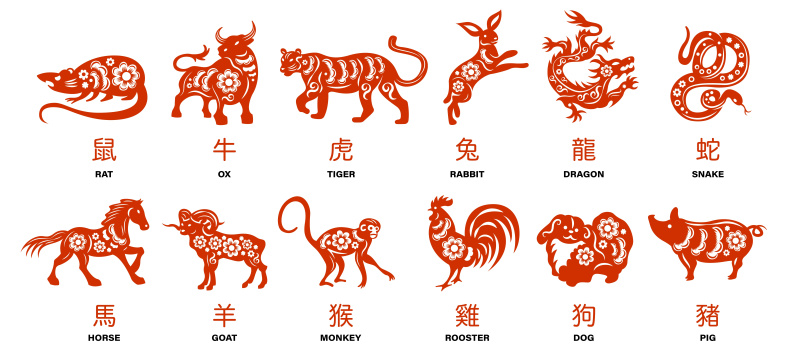
In the ancient Chinese astronomical calendar, there are 10 Heavenly Stems and 12 Earthly Branches. The Earthly Branches correspond to the 12 zodiac animals in the folk tradition, in which the Horse is considered to be fiery by nature. 2026 by the Heavenly Stems also points to the element of fire. This “fire over fire” configuration has long been associated with radical change — for better or worse — shaping cultural memories across East Asia for millennia.
Long ago in Song Dynasty China, a Taoist priest warned the emperor of impending disaster. His prophecy seemed to come true in 1126, when the Jurchen army sacked the capital, capturing the emperor and ending the dynasty. Later scholars compiled a compendium of disasters tied to the Fire Horse, framed as a moral and political warning to rulers. It cemented the reputation of the Year of the Fire Horse as a year of reckoning.
Without joining the ranks of ancient astrologists or modern diviners, we might still take history as a mirror for today. So, conduct a cleaning to get rid of misfortunes, cherish family and friends and safeguard life and freedom in the coming new year.
Interested in reading more from the School of Humanities? Sign up for our monthly newsletter.