
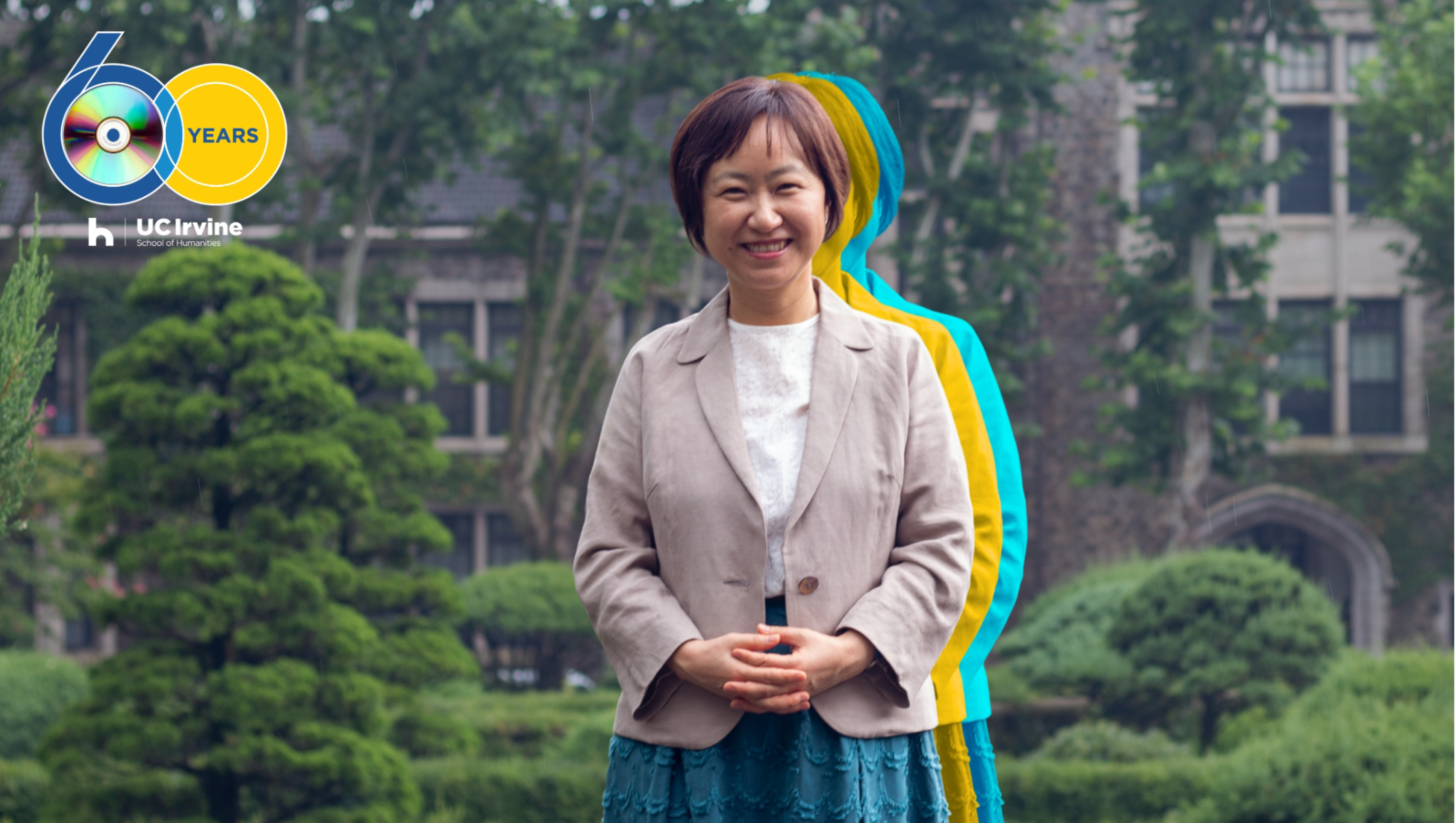
Alumni Through the Decades: 2000s
The 2000s ushered in a digital revolution, and at UC Irvine, the humanities continued to expand in new directions too. Our 60th anniversary alumni series continues with Helen J.S. Lee ‘03 (Ph.D. East Asian languages and literature), who arrived at UCI after earning a B.A. in Japanese from Washington University in St. Louis and an M.A. in Asian Studies from Cornell University. When she learned that UCI was launching a new doctoral program in East Asian Languages and Literature, she jumped at the chance to be part of the inaugural cohort.
After earning her doctorate specializing in modern Japanese literature, Lee joined the faculty at the University of Florida before building a distinguished career at Yonsei University in Seoul, Korea, as a professor. Her research on Japan-Korea colonial relations, which first took shape at Irvine, has defined her scholarship and career across continents.
What made you choose UCI for your education and why did you choose your specific major and career path?
When I was completing my master’s degree in Asian Studies, I began exploring Ph.D. programs in Japanese literature. I learned that UCI was launching a new Ph.D. program in East Asian Languages and Literature with an impressive group of faculty. The opportunity to join the inaugural cohort in 1993 was especially exciting, and I was honored to be part of the founding class.
I was initially drawn to the Japanese language, which soon led me to literature. During graduate school, I became increasingly motivated by research questions that eventually shaped my doctoral dissertation on Japan–Korea colonial relations. Those early intellectual curiosities ultimately defined both my specialization and my academic career.
What was student life and the campus culture like when you attended?
Coming from the East Coast, I found the departmental atmosphere at UCI remarkably warm, friendly and communal.
One of my fondest memories is of the regular department gatherings – potlucks, barbecues and holiday celebrations – generously hosted by faculty and their families. Those occasions fostered a strong sense of intellectual and personal community.
How did you spend your free time as a student? What were some of your favorite spots on and off campus?
UCI’s proximity to Newport and Laguna beaches made it easy to spend free time by the ocean or in nearby parks. I also remember enjoying local eateries – Einstein Bros. Bagels and the many affordable Mexican, Japanese, Korean and Chinese restaurants in the area. Irvine truly became my home. I still recall how emotional I felt leaving for Florida to begin my first tenure-track position.

What advice would you give current UCI students and soon-to-be alumni?
I would encourage current UCI students and soon-to-be alumni to value the strength of public education. Take initiative, seek out mentors and cultivate intellectual community – it will sustain you long after graduation.
As a public institution, UC Irvine operates with fewer resources than some private universities. When I entered the job market, I was competing with candidates from prestigious, fully funded programs. Because funding was limited, I worked extensively as a teaching assistant – often teaching my own sections – which extended my time to receiving my degree. In retrospect, however, that intensive teaching experience proved invaluable. By the time I entered the academic job market, I had already developed substantial classroom experience, which ultimately helped me secure my first position.
Looking back, how do you think your UCI education impacted your life and career path after graduation?
UCI fostered an intellectual environment in which I could truly grow. Those of us who completed our Ph.D.s at Irvine share deep appreciation for advisors who allowed us to develop our own scholarly identities. They were patient, dedicated and generous mentors. Rather than teaching us to compete with one another, they taught us how to collaborate and grow together.
My relationships with my professors shaped the kind of teacher I aspire to be. I was fortunate to study under mentors who modeled modesty, humility, fairness, collegiality and cooperation. These values continue to guide my teaching and leadership, both inside and outside the classroom.
Interested in reading more from the School of Humanities? Sign up for our monthly newsletter.