Ask an alum anything
By Derek Cheng
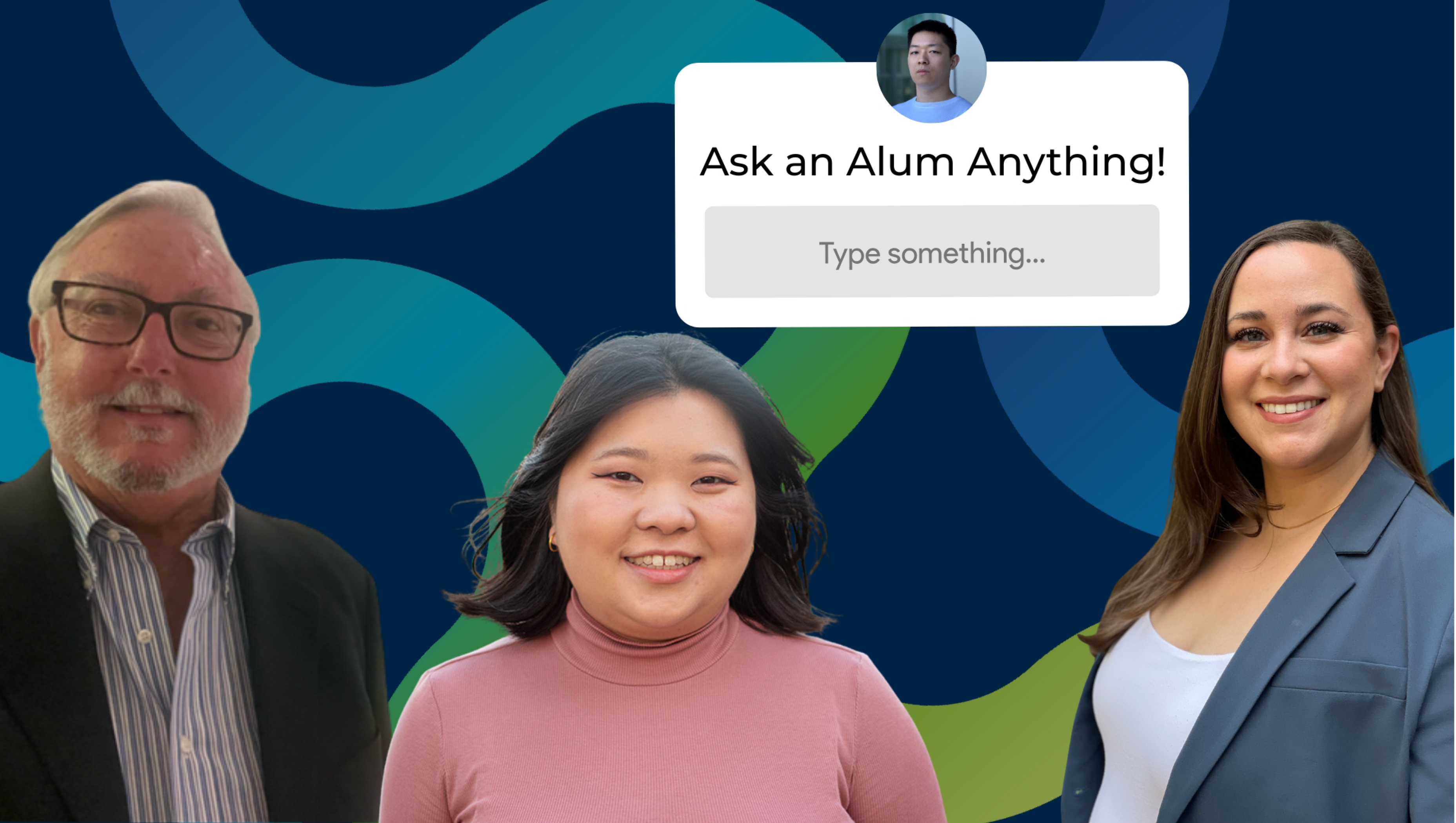
Navigating life after graduation can feel daunting, but you don't have to figure it out alone. Whether you're wondering about job searching, graduate school or simply what a humanities degree can lead to, we connected soon-to-be humanities graduates with alumni at different career stages to share insights and answer questions about what comes next.
Meet Hope Vang ‘23 (B.A. English and Comparative Literature), Stephanie Narrow ‘23 (Ph.D. History) and Craig Raynsford ‘77 (B.A. History).
What do you do if you feel like the career path you’ve chosen early on isn’t working out? How should people navigate through issues regarding career insecurity?

HV: One of the greatest pieces of advice I’ve received was from a UCI professor. Upon finding out I was planning to pursue a career in academia, they told me that I should not be afraid to ask questions and speak up. Talking was the key to demystifying any doubts that clouded my dreams. It is also important to find voices outside your industry, like family and friends, because they have valuable insights to offer that you may not have previously considered. Talking not only teaches you about the career you plan to be in, but it also gives you opportunities to learn things about yourself. Some of our skills and talents go unnoticed by ourselves, but shine brightly for others, and these new perspectives can help us make confident decisions about our career amidst our insecurities. Seeking community support can be daunting or even taboo in any industry, but we shouldn’t be afraid to ask for help, guidance or advice when we are surrounded by so many people who want to see you succeed.
CR: Give your career path a chance. Often new employees are given introductory tasks that are not as exciting as they would imagine. While you are being paid at your present job, start to look at alternative routes. Keep the paycheck while you explore the options of advancing where you are or moving to another occupation area. Seek advice from parents, peers, etc.
How did you navigate the job market early in your career and what was most beneficial to you in doing so?

SN: As I approached the end of my Ph.D. and knew I had to start looking for jobs, I focused on networking. I think that's one of the biggest things I would recommend to anyone, whether it's a graduate student or an undergrad approaching graduation. There are a lot of networking and alumni events at UCI that I always recommend attending. LinkedIn is also a great place to start. Most companies, especially in the corporate sector, have LinkedIn profile pages. Find alumni on LinkedIn, reach out to them and ask them for an informational interview. Do all the administrative work to make it as easy as possible on the person you're requesting time, interest and expertise from. I found that more often than not, people are more than willing to help, especially other alumni or people who've been in similar places. Be willing to reach out and be willing to get a couple nos, knowing you'll likely get a few yeses too. I got my job through leveraging my network.
How have you seen technology impact the industry you’re in, and what kind of advice do you have for graduates looking to enter your field?

CR: Technology has changed everything — period. The area of law is no exception. From rapid-fire word processing to instantaneous legal research, all aspects of our profession have been impacted — and not necessarily always for the better. I fear technical expertise and our ties to “screen life” have overtaken individual thought process, creativity and critical thinking. My advice for graduates entering law is to push away from the screen and contemplate the issues and solutions before you without the distraction of multitasking on your computer or iPhone.
SN: I maintain a healthy skepticism about how AI platforms can be used, especially in human resources. The state of California recently passed laws about how AI can be used in hiring practices, and I agree with many of those mandates. Not everything can be automated; human intervention should remain at every point of the hiring process in all industries. One of the main things I'm hesitant about when it comes to AI is: am I going to rely too heavily on AI and reduce my ability to think critically and strategically? I think there's a way to leverage AI that can make mundane tasks easier. For instance, I have to write job descriptions for some of the searches I'm conducting. I'll use something like ChatGPT to help rephrase or streamline things for me. My leadership knows and encourages this because it helps truncate a process that would sometimes take me an hour down to 15 minutes. I don't use ChatGPT for things like blog posts I write for my company that we use in marketing materials. I'm vehemently against that. I also don't use AI for simple queries that I know I can figure out myself. I use it selectively and strategically on tasks where I know it's going to make me more efficient and optimize my process, but it's not going to substitute my critical thinking by providing answers for me.
Is there anything you wish you did in college that you feel would have positively impacted your career trajectory today?
HV: While I was close to a few of my professors, I wish I pushed myself to network with more students, faculty and staff within the School of Humanities. As an undergraduate, I let my insecurities get the best of me. I thought I wasn’t as innovative or intelligent as my peers, and this ultimately sank some valuable networking opportunities and relationship building between my peers and my professors. I didn’t attend office hours and instead relied heavily on taking multiple classes with the same professors to build a relationship. This not only limited the amount of professors I knew, but also limited my understanding of the kinds of support they could have provided in terms of my academic, professional or personal growth.
Now as an English master’s student at Fresno State, I’ve done a complete 180. I am incredibly involved on campus, which has allowed me to build relationships with not only the master’s students, but also undergraduates and students in the MFA program. I am also a frequent visitor in office hours, which not only makes asking for letters of recommendation so much easier, but it has given me specially tailored advice for my prospects as an aspiring Ph.D. student and future English professor. It has opened doors to professional opportunities to build my skills as a researcher and teacher, too.
Stay tuned for the next installment of Ask an Alum Anything!
Interested in reading more from the School of Humanities? Sign up for our monthly newsletter.