
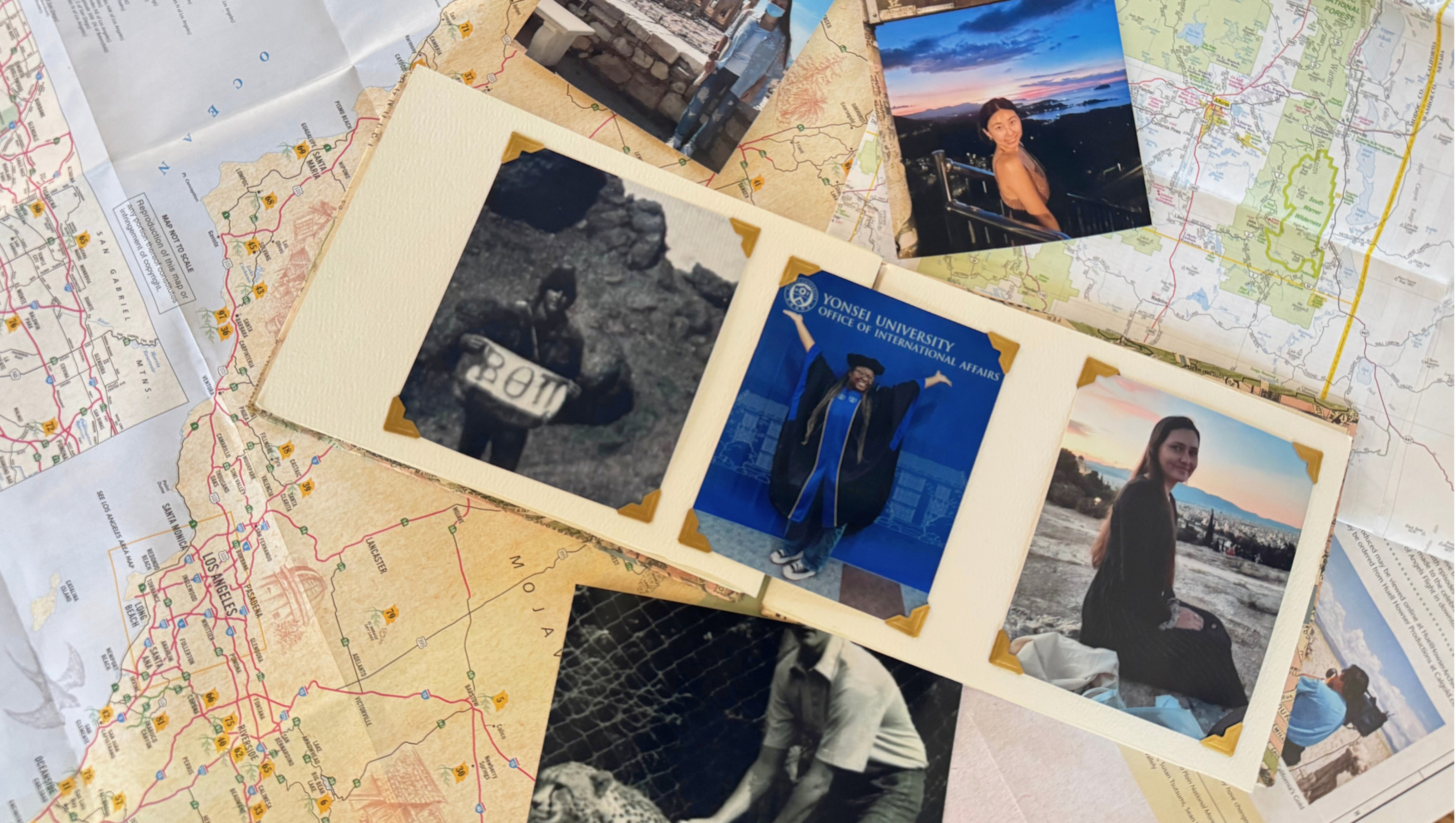
Learning in a global classroom
By Nikki Babri
When studying abroad in Athens, Greece, Samantha Jewell ‘22 (B.A. classics; minors in archaeology and political science) expected a dramatic, life-changing moment. Instead, transformation came from getting lost in a Greek grocery store and accidentally buying vegan feta cheese. But that, she discovered, is exactly the point.
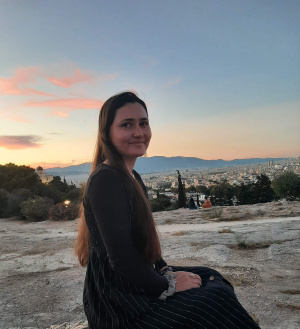
“The study abroad experience is profoundly impactful because it’s made of these small moments, just regular, everyday life. It’s all new,” Jewell explains.
Sometimes, though, those moments do become life-changing. When history major Craig Raynsford ‘77 stood atop Mount Kilimanjaro during his junior year abroad in Kenya, gazing across the vast, undisturbed plains of Tanzania, that singular moment crystallized his path toward a 40-year career in international law.
Though nearly five decades apart, both stories – the everyday and the extraordinary – reveal what thousands of humanities students at UC Irvine have discovered: study abroad offers more than passport stamps and enviable social media pictures (although, Jewell did run into Tom Hanks while on an archaeological dig!). It provides the kind of immersive learning that reshapes how students understand their field of study, their career possibilities, their own country and culture and themselves personally. Study abroad, with its encounters with new friends, new ways of life and often another language, broadens the outlook of students in ways that can be truly life-altering.
While learning about another culture, students studying abroad often question who they themselves are and what they represent to others. Their experience of becoming, temporarily, a stranger in a strange land, a “foreigner,” that person who speaks with an accent, can be unsettling and challenging. But such experiences may also deepen their awareness of who they are, where they came from and what they want to do once they return home. At home, they may come to see with different eyes the many “strangers” who are “abroad” around them.
Immersion beyond the classroom
Through studying the humanities, students are trained to analyze literature, history and human societies. Studying abroad, however, adds a new dimension to these experiences, giving them the opportunity to fully immerse themselves within a real-world cultural context.
“Putting theory into practice was my greatest lesson,” explains Jewell, who had just switched her major from physics and math to classics. Whether attending class at an ancient ruins site or learning to carve marble with a hammer and chisel, Jewell found herself connecting across millennia to the society she was studying. “Art and storytelling connect through space and time. I kind of understood that before studying abroad, but now I was a part of that connection.”
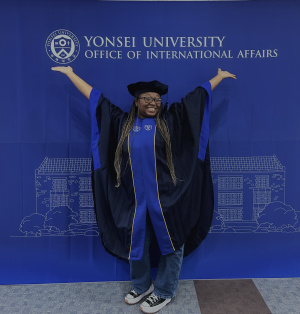
For Makyla McLeod ‘25 (B.A.s literary journalism and international studies), who studied at Yonsei University in South Korea during summer 2024, immersion began immediately. On her first day in Seoul, a bus driver yelled at her group for standing on the wrong side of the street. Another woman scolded her for misreading Korean signage at a food counter.
As a first-generation student who had never left the country, McLeod had approached her program with careful research. But when the initial excitement faded and the realities of managing a new culture, coursework, finances and homesickness set in, she discovered preparation could only go so far. “It was a lot of adjustment that I couldn’t do any amount of research for. I just had to live through it,” she reflects.
Through trial and error, observation and patience, McLeod developed strategies for navigating her new environment. By the halfway point, she was confidently traveling the city independently, even beyond tourist areas. “I’ve always had respect for the diversity of thought, cultures and peoples,” she shares. “However, to truly experience those differences and to be immersed in that varying worldview was beyond eye-opening.”
Learning to trust yourself
Perhaps the most significant takeaway from study abroad is personal growth. Natalie S.K. Ringdahl ‘25 (B.A.s philosophy and political science) learned to ride a bike for the first time in 2024 – not on a familiar California street, but in Tainan, Taiwan, where cycling was the only feasible way to get to class at National Cheng Kung University.

“I still reminisce about my blue and rusty red bike because it marked the beginning of my life in Taiwan,” Ringdahl shares. “My bike symbolized my ability to adapt not only to a new culture, but a new lifestyle. It was, quite literally, a vehicle to my growth.”
Everyday tasks like eating, doing laundry or taking transportation suddenly became challenges that required her to observe life from a fresh perspective. “Studying abroad forced me out of my routines, demanded I learn new skills to survive and was what I can only describe as uncomfortable,” Ringdahl continues. “And yet, the interpersonal growth I experienced while abroad was, unexpectedly, the thing I attribute the most to my current success.”
Jewell faced her own moment of discomfort when adapting to a dramatically different classroom environment. Her program offered intimate classes of five to seven students, a stark contrast to UCI’s large lecture halls. “I felt like I was jumping off the high dive every time my professor asked me to conjugate a new verb,” she recalls.
But this discomfort became transformative. “It was very challenging, but it’s what I signed up for when I told myself I wanted to put myself out of my comfort zone,” Jewell explains. The confidence she developed extended far beyond the classroom. “I can answer questions confidently in interviews, I can speak in public, I can be a leader. I carry myself differently,” she shares. “I can trust myself, and that means I can do and get through anything.”
That confidence sparked deeper interest in archaeology, leading her to pursue digs in Portugal after graduation – trips she continues to this day. This experience ultimately led to her current role in international education at the University of California Education Abroad Program.

Skills that last a lifetime

The confidence and skills students develop translate directly to career success. Research consistently demonstrates that students who study abroad develop the cross-cultural competence and adaptability employers increasingly seek, with studies showing better employment outcomes, higher salaries and higher graduate school acceptance rates.
The long-term professional impact of study abroad often reveals itself years after students return. Arriving at the University of Nairobi, Raynsford recalls leaving his Orange County “bubble” and quickly developing what he calls “situational awareness.” He learned to view the world through others’ perspectives, understanding the challenges and contexts that shaped their lives.
These skills proved invaluable across his 40-year career representing the United States in international law. “Throughout my career I spent a lot of time with representatives from other countries. Studying abroad gave me a leg up in understanding how to respect them and how to watch for cues about how they did things in their society.”
For newer graduates, the professional benefits are equally clear. McLeod has found that her study abroad experience both diversified her portfolio and demonstrated important professional skills. “Studying abroad in a communications field, especially one like journalism, plays a crucial role in showing employers that you’re able to navigate various audiences as well as adapt both your work and yourself,” she notes.
Paying it forward
The lasting impact of studying abroad has inspired some alumni to ensure future generations have the same opportunities. Kendra Mirasol ‘88 (B.A. German literature), recipient of the 2025 UCI Lauds & Laurels Distinguished Alumni Award, recently established the Mirasol German Program Travel Endowment to provide students with funds needed for future study abroad opportunities.
Mirasol’s own study abroad experience in Bavaria and Switzerland in the 1980s opened professional doors beyond graduation, eventually leading to leadership roles helping thousands of families and professionals navigate international opportunities. “I would like to have the impact be in perpetuity,” she explained. “I want this opportunity to be there for students who don’t necessarily have the funds to purchase a flight to go abroad.”
Recent students who have studied abroad equally encourage their peers to take the leap. “There’s no better way to study the humanities than living with a new group of humans,” Jewell says. “Our world continues to become more globalized every day, and recalibrating your values and goals by embarking on an academic experience such as this will make you a better communicator and leader.”
McLeod agrees. “As a first-gen, out-of-state student, I thought my worldview was already pretty dynamic, but studying abroad broadened my horizons more than I could have even imagined. If you can, do. It won’t be easy, but you won’t regret it.”
For students interested in studying abroad, visit the Study Abroad Center to begin exploring international opportunities.
Interested in reading more from the School of Humanities? Sign up for our monthly newsletter.