
Colonial Mexico’s forgotten history
By Nikki Babri and SueJeanne Koh
The transatlantic slave trade has been documented with extraordinary precision. Scholars know how many ships crossed from Africa, which ports they left from and roughly how many people survived the voyage. What has been far harder to track is what happened after the ships arrived, and how enslaved Africans were bought, sold and forced to move deeper into the Americas.
It is exactly this interior geography of forced migration that Alex Borucki, professor and chair of history at UC Irvine, has spent years working to document and make visible. A $150,000 grant from UC Alianza MX for Trayectorias Afro: The Movement of Enslaved Africans and their Descendants Within New Spain will help make this possible.
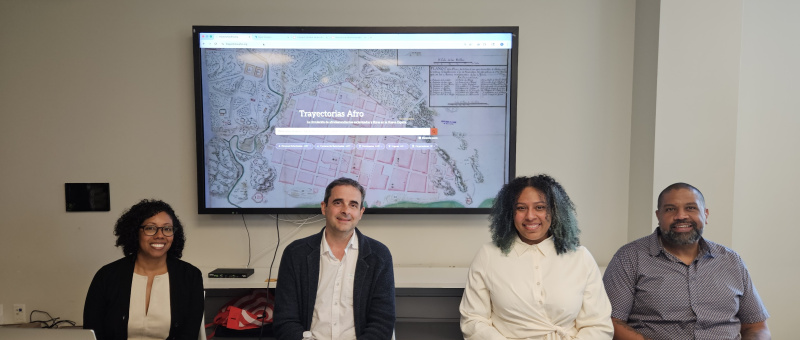
Trayectorias Afro is a digital database documenting the movement of enslaved Africans within colonial Mexico. Developed in collaboration with Mexico’s Instituto Nacional de Antropología e Historia, the website launched publicly at UC Merced in March 2026, with an official event in Oaxaca planned for fall 2026. While the project is currently only available in Spanish, the 2026-27 grant will fund its English translation. The funding will also support bilingual K-12 educational lessons, teacher workshops and community events in Orange, Santa Barbara and Merced Counties.
A decades-long effort
Trayectorias Afro is the newest arm of Routes of Enslavement in the Americas, a UC-wide research initiative Borucki leads alongside Gregory O’Malley at UC Santa Cruz and Sabrina Smith at UC Merced.
The roots of the project stretch back decades to SlaveVoyages, an open-access database Borucki first encountered as a graduate student at Emory University. The database documents nearly 36,000 trips across the Atlantic Ocean from Africa to the Americas, and draws on national archives from 27 countries.
It didn’t capture movements made after the ships docked. About 25 percent of the people who crossed the Atlantic were soon forced onto other ships, riverways and overland routes for further distribution within the Americas. In 2016, Borucki and O’Malley received a National Endowment for the Humanities grant to address that gap, creating the Intra-American Slave Trade Database, which launched in 2018 and now documents more than 37,000 of those secondary maritime voyages.
In 2023, the University of California awarded Borucki, O’Malley and Smith an $840,000 Multicampus Research Programs and Initiatives (MRPI) grant to expand their research into the Black Pacific slave trade, Caribbean migrations and colonial Mexico’s interregional slave routes. The latter focus became Trayectorias Afro, which welcomed Brisa Smith-Flores of UC Santa Barbara, a former UCI presidential postdoctoral fellow, as a co-PI.
Records of life, not just data
Where SlaveVoyages and the Intra-American database trace the large-scale movement of ships, Trayectorias Afro tracks people over land. Its roughly 6,000 records, spanning the late 1500s through the mid-1700s, are drawn from colonial archives where slave sales were recorded like any other transaction.
“The unit of the record is the people,” Borucki says. “The website is about records of life experience, of people moving from one place to another, sometimes alone, sometimes with their families.”
This makes possible a different kind of history, one told through individuals rather than statistics. The data can trace a group of enslaved Africans who arrived together on the same ship and were forced to travel the same overland route from the Mexican coast to the Gulf to inland Oaxaca. “That tells you something about community and survival, not just the mechanics of the trade,” Borucki shares.
The records also reveal something that even researchers found striking: the extent to which the Catholic Church drove the slave economy. While the Church was the largest institutional slaveholder in colonial Latin America, the data makes that reality newly visible in its specificity across regions, cities and religious orders. “Convents, monasteries, bishops, the Jesuits, you name it,” Borucki explains. “They were among the largest buyers and sellers of enslaved people across the entire territory.”
The students behind the data
Building these databases requires hours of labor and careful attention by historians, archivists, research administrators, librarians, digital humanists and, not insignificantly, UCI graduate students. For those students, an added challenge is that the project operates almost entirely in Spanish, putting both their language skills and their scholarly range to the test.

Berenice Tepozano, a Ph.D. candidate in history whose dissertation focuses on the socioreligious practice of seclusion (or recogimiento) in 18th-century Mexico City, spent much of 2024 as the lead Graduate Student Researcher on Trayectorias Afro. Her work involved standardizing data from historians across the U.S. and Mexico, inputting thousands of records into the database and helping test the site ahead of its launch. Particular attention was given to accurately tracking each person’s age, bodily markings, kinship ties and geographic movement.
The experience changed how she approaches archival work. “Working with data on enslaved and freed Afro-descended families reminded me about the importance of humanizing data in historical research,” Tepozano reflects. “It is very easy to work quickly to input data to complete your work hours. However, I found myself doing the opposite, and instead slowing down. I found it critical to acknowledge the history at my fingertips by staying present in my work and trying my best to accurately record the information.”
Other UCI students have contributed across the project’s different arms. Spencer Gomez ‘25 (Ph.D. history), now an assistant professor at Angelo State University in Texas, adapted records on the Pacific slave trade between Chile and Peru. Marlyn Maldonado ‘23 (Ph.D. Spanish) collected digital images of slave trade documents at the Archivo General de Puerto Rico, Puerto Rico’s national archive. Both current UCI history Ph.D. candidates, Camila Sanhueza is curating records on 18th-century Pacific trade routes between Panama, Ecuador and northern Peru, while Arielle Steimer-Barragán will join the Trayectorias Afro team ahead of the fall 2026 launch to work with historians of colonial Mexico.
For Borucki, the students’ involvement shapes their scholarly development in ways traditional archival training doesn’t. “They have learned how to conduct collaborative research and engage in quantitative methods to build databases from historical primary sources and the work of other historians,” he says, noting the students’ added ability to work with specialists from different generations and ethnic origins. “They had to develop thorough and precise interactions, which is essential to completing complex, multi-step and multi-language collective research projects.”
Entering the classroom
Tepozano hopes the project’s reach extends well beyond the university. “The Trayectorias Afro team offers a great example of how scholars across borders can come together to develop a shared learning tool,” she says.
The new UC Alianza MX grant will broaden the project’s reach. California history courses rarely address the entangled history of enslavement in Mexico and the American Southwest. The grant will fund bilingual educational materials and teacher workshops across California. These workshops will be organized in partnership with the UCI History Project, a campus initiative that connects historians with K-12 teachers to strengthen how history is taught in the classroom.
The goal, ultimately, is a community of users – students, teachers and scholars in the U.S. and abroad – who keep the project alive and growing. Digital humanities projects don't sustain themselves, Borucki explains, and a database that stops growing becomes stagnant. SlaveVoyages has endured because scholars around the world continue to add to it and thousands of students visit it daily. It is a model Trayectorias Afro hopes to follow.
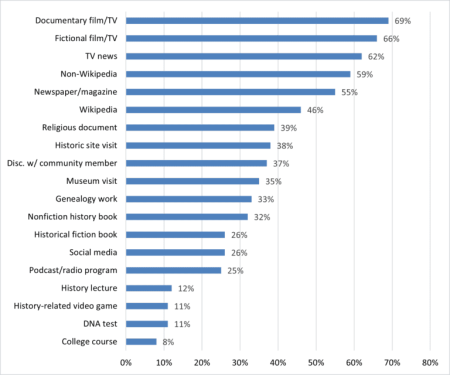
Borucki points to a survey by the American Historical Association that found that people most commonly encounter history through documentaries, films and television. Among 19 sources, history lectures ranked 16th and college history courses were last.
For him, the implications are clear: “The only way historians can secure a larger engagement with audiences and transform historical understanding is by engaging in these types of projects,” Borucki emphasizes. “If there is a certain number of people using this every year, whether for their own research or for assignments in a history course, that’s what success looks like.”
Interested in reading more from the School of Humanities? Sign up for our monthly newsletter.
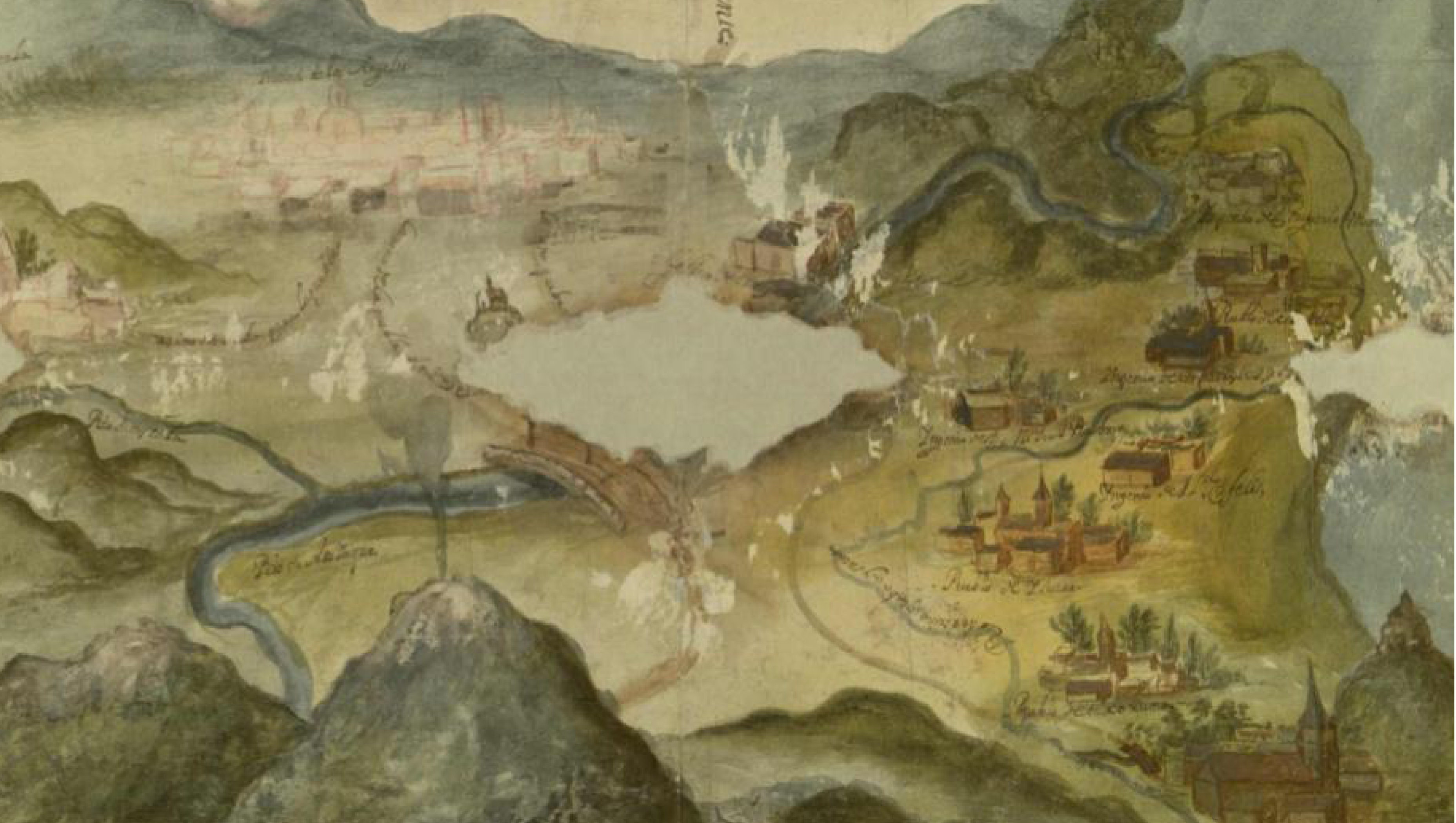
(Main image: National Archives of Mexico)