
Juneteenth: Oppression, resistance and pushing forward
By Andrew Jimenez
For UC Irvine historian Jessica Millward, the story of Juneteenth has always followed a predictable arc. “It’s all cyclical,” she explained on the UCI Podcast. “African American oppression, African American resistance to that oppression and then sources of African American strength are all woven together. There’s an atrocity, and there has to be some kind of celebration at some point, or some reaching back to the past, so that people can push forward.”

She couldn’t have predicted, when she said those words in 2020, how precisely they would describe what was coming. Five years later, the first federal holiday recognized in nearly two decades is losing financial support as restrictions on DEI programs and laws preventing academic institutions from discussing its history take hold nationwide.
Reaching back to the past
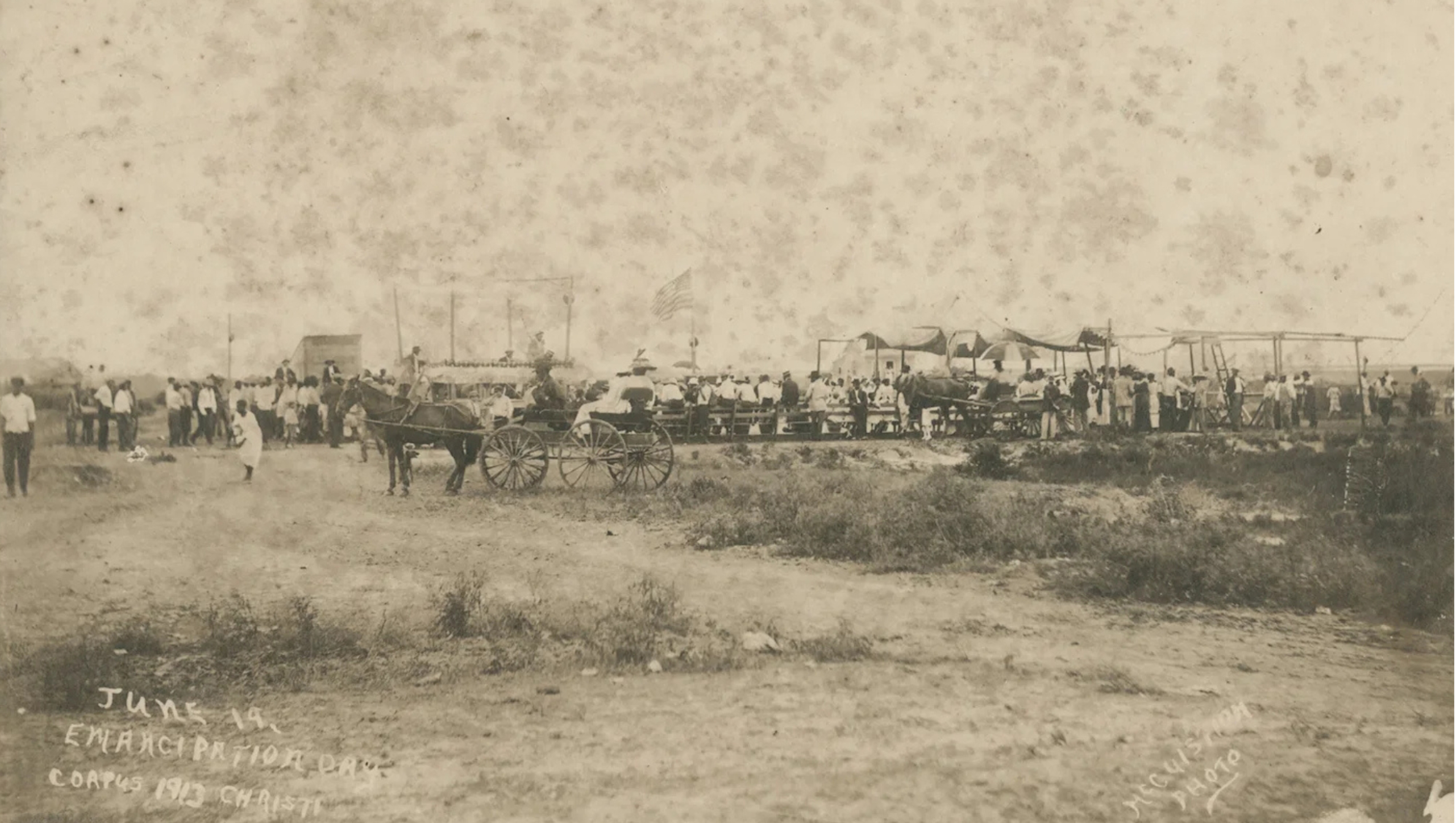
Juneteenth can be traced back to June 19, 1865 – more than two years after the Emancipation Proclamation – when the newly freed population of Texas gathered in churches to commemorate the end of slavery in the United States.
The story of Texas's emancipation is at the core of the histories of millions of African Americans today. Hobart Taylor, an organizer of the OC Juneteenth Celebration, can trace his family’s history in America back to his grandfather, Jack Taylor. “Family legend has it that Jack’s father had come to Texas as property of a man named Taylor from South Carolina,” he explains. “Jack was freed from enslavement sometime in the late 1860s, later than the Emancipation Proclamation, as were most of the Texas slaves.”

This delay wasn’t accidental. Assistant Professor of History Samantha De Vera, who taught a course on “Black Movements” this spring, explains why enslaved individuals had to wait longer than the rest of the country to be liberated. “The vastness of the state meant that it was easier to isolate enslaved people in Texas from their communities and networks,” she says. “News of the events during the war beyond the state of Texas didn’t travel as fast.”
While Texas became the first state to recognize Juneteenth as an official state holiday and paved the way for it to be recognized nationwide, it is also the state that, in 2023, passed Senate Bill 17 which banned universities from participating in activities geared toward diversity, equity and inclusivity. Texas universities were left unable to support or even discuss the state’s close history with the holiday.
A holiday under pressure
In becoming a federal holiday in 2021, Juneteenth should have been an opportunity for reeducation and acknowledgment of America’s history of slavery. What followed has been more complicated and fraught with political pressure.
“Instead of the holiday being a time of serious reflection and reconnection by all Americans,” Millward observed, “Juneteenth is drawing pushback from conservatives who are 'anti-woke,’ which translates into 'anti-black.’”
As anti-DEI laws began to take effect in states like Texas, some corporations that had previously sponsored Juneteenth events withdrew that support, despite continuing to profit from related holiday merchandise. Millward captures the contradiction plainly: “The irony is that Target in particular sells Juneteenth items all while it dismantled DEI initiatives.”

For Assistant Professor of History Felix Jean-Louis, what the holiday symbolizes makes this all the more troubling. “Despite legal freedom, there are structural and cultural forces that hold African Americans in second-class citizenship and mitigate rights,” he explains. “The continued struggle for Black liberation includes freedom from hunger, violence, illness and the conditions that defined slavery.”
Why the humanities keep teaching the uncomfortable
History isn’t a thing of the past and Juneteenth isn’t only about what occurred in 1865. Much remains unfinished, which underscores the holiday’s continued importance and the need to preserve its representation in academic spaces and beyond.
While grants that focus on race, gender and diversity have been cut and corporations have withdrawn their support for such initiatives across the country, UCI has continued to teach the true history of this period and defend the academic freedom that makes this learning possible. Juneteenth “is a reminder that we as people of African descent and our allies need to remain vigilant and resolute in the struggle for Black freedom,” explains Jean-Louis.
Despite this new wave of oppression, Millward believes the African American community will continue to rise against injustices and find reasons to draw from the enduring strength of African-descended peoples in the U.S. “It’s my prediction that Juneteenth will continue to be an important site of commemorations and reconnection for African Americans, regardless of how the country proceeds,” she says. “In fact, it may be more important than ever before.”
Hobart Taylor encourages attending the local OC Juneteenth Celebration on June 20, 2026. All are invited to experience the significance of Juneteenth through an uplifting day of music, dance, food and cultural performances.
Main image: People gathered before a stage. Photograph by George McCuistion of Juneteenth celebrations in Corpus Christi, Texas, 1913. — Source
About Andrew Jimenez
Andrew Jimenez is a freelance writer and aspiring journalist. He wishes to use his lifelong passion for writing and research to inspire and inform others through his works. Jimenez graduated from UCI in 2024 with a B.A. in history.
Interested in reading more from the School of Humanities? Sign up for our monthly newsletter.