
This section contains archived content made available for reference, research, or recordkeeping purposes. These materials are not actively maintained and may not meet current accessibility standards, such as WCAG 2.1 Level AA. If you need assistance accessing this content or require an accessible format, please contact sohwebmaster@uci.edu. We are committed to ensuring access for all users and will provide accommodations promptly upon request.
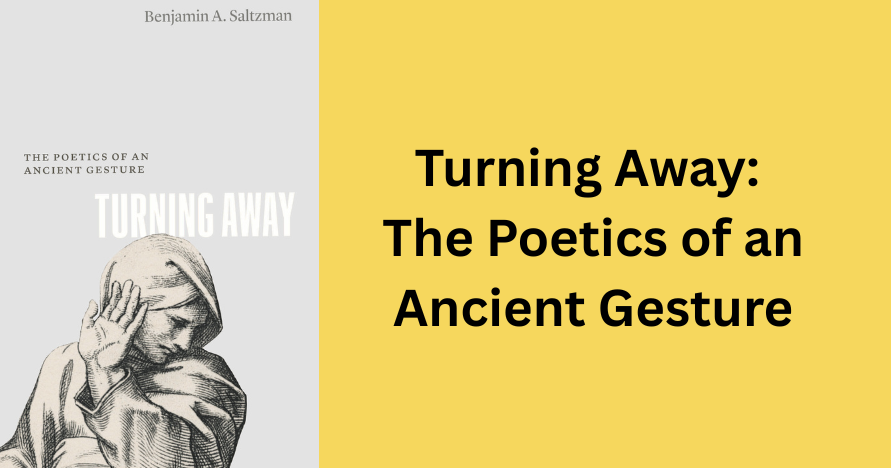
In this talk, Benjamin Saltzman offers an iconographic tour of the Fall and Expulsion of Adam and Eve—with twists and turns both predictable (Milton) and unexpected (Salvador Dalí!)—in order to show how the gesture of turning away resonates into modernity’s preoccupation with the aesthetics of science, sexuality, and displacement. Based on his new book, Turning Away: The Poetics of an Ancient Gesture (University of Chicago Press, 2026).
Co-sponsored by the Department of English, Early Cultures, Medieval Devysings, and the Form Group.

Benjamin A. Saltzman is associate professor of English at the University of Chicago, where he coedits the journal Modern Philology. Saltzman is the author of Bonds of Secrecy: Law, Spirituality, and the Literature of Concealment in Early Medieval England and the co-editor of Thinking of the Medieval: Midcentury Intellectuals and the Middle Ages.

A Sweeping account of how we are at our most human when we turn away from the pains of the world.
“Endlessly rich, and as imaginative as it is scholarly, Turning Away gives us startlingly new insights into a fascinatingly negative gesture.”—Sianne Ngai, author of Ugly Feelings
Why do we look away from the suffering of others? Why do we cover our faces in shame or lower our heads in grief? Few gestures are as universal as the averted gaze. Fewer still are as ambivalent and inscrutable. In this incisive study, Benjamin A. Saltzman
Into the horizon of contemporary discourse, Turning Away sets out from five influential scenes in which figures avert their gaze: Timanthes’s Sacrifice of Iphigenia, Plato’s Republic, Augustine’s Confessions, Christ’s Crucifixion, and the Fall and Expulsion of Adam and Eve. The gestures of aversion in these scenes refract across visual media, through philosophy and politics, into modernity and the present day, having been reimagined along the way by thinkers like Hannah Arendt, artists like Marc Chagall and Salvador Dalí, poets like Langston Hughes, and many others. Saltzman offers a timely critique of the privilege of turning away and of the too-easy condemnation of our tendencies to do so.