
The art of tempting fate
By Nikki Babri
A decade ago, Distinguished Professor of Philosophy Duncan Pritchard and his wife left a comfortable life in Edinburgh and moved their family halfway around the world to Southern California, where he would take up a position at UC Irvine. While the move paid off, the decision itself was inherently risky.
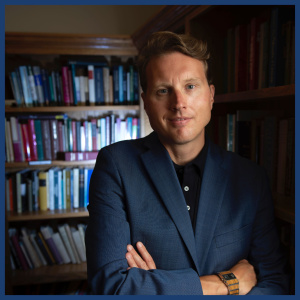
“There’s just no way of knowing in advance that such a decision is going to work out,” Pritchard says. “Perhaps we end up hating the sunshine! Perhaps the kids are unhappy at their new schools and can’t settle. Perhaps we miss our old lives too much.”
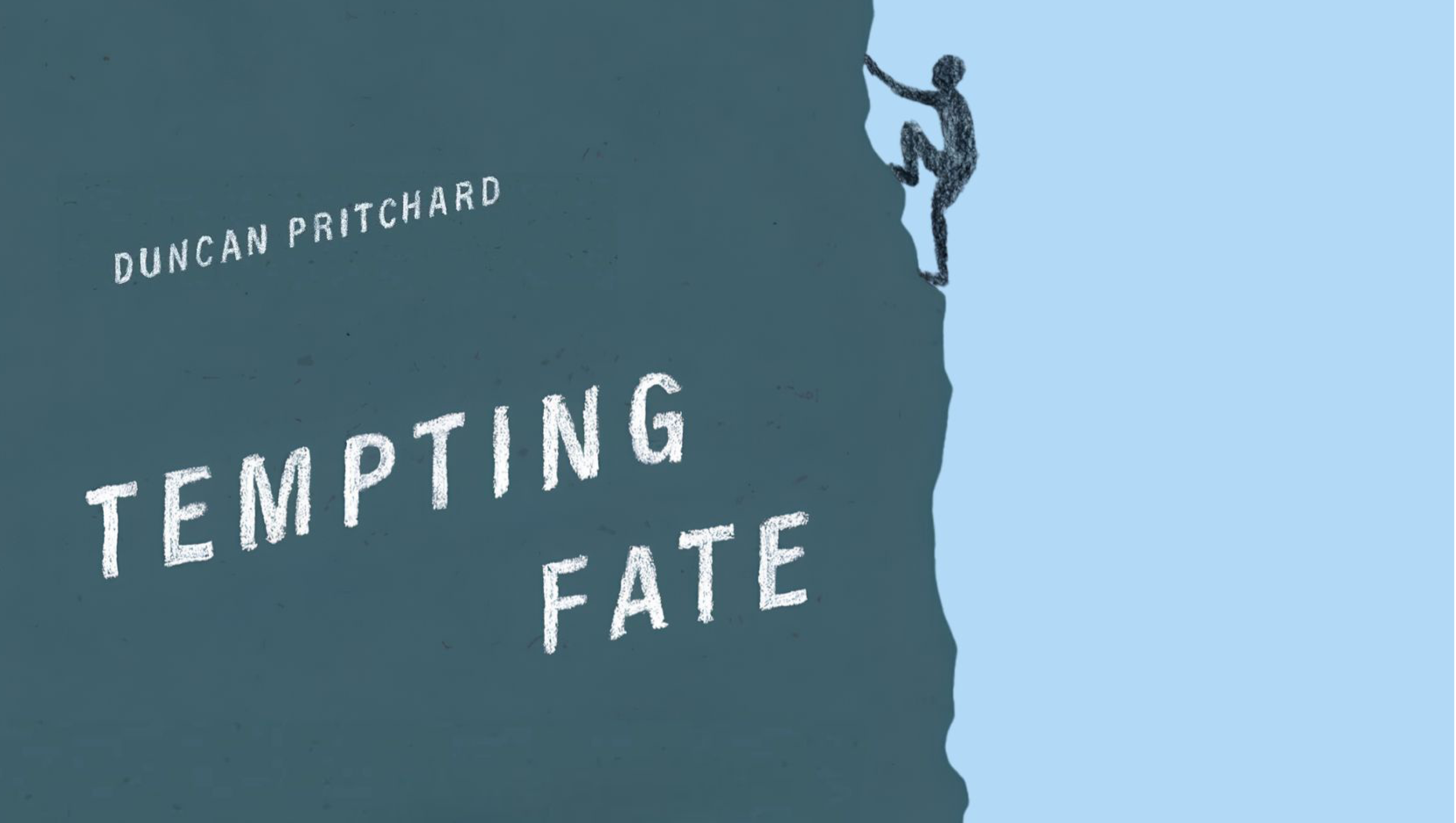
Through the years, an idea began to percolate: a meaningful life requires taking big risks, and the key is learning to take them wisely. That idea became the basis for Pritchard’s new book, Tempting Fate: A Philosophical Guide to Risk, Luck, and a Meaningful Life (Princeton University Press, 2026).
Rethinking risk
The title is a nod to his late mother, Daisy, who often warned that one should never tempt fate. Announce that your life is perfect, the thinking went, and the gods would hear you and send a bolt of lightning your way.
While he still heeds her advice to a certain degree, Pritchard argues there is a broader sense of tempting fate that we should embrace, one that involves taking large risks. “I don’t mean by this that one should dangle off the side of a skyscraper every once in a while,” he writes. Instead, he’s referring to the major choices that shape our lives, such as switching careers, having children or, like his family, moving to a new country. These all carry real risk, so how can we take them reasonably, and why is doing so central to living well?
Pritchard is best known for his work in epistemology, or the theory of knowledge. More than 20 years ago, he pioneered the study of luck, and later risk, in contemporary philosophy. Tempting Fate builds on that work, starting with how risk is usually understood: in terms of probability. An activity is high risk if the unwanted outcome, or “risk event,” is likely to happen, and low risk if it isn’t.
To show why this falls short, Pritchard looks to Alex Honnold’s 2017 free solo climb of El Capitan, the nearly 3,000-foot granite face in Yosemite National Park featured in the Oscar-winning documentary Free Solo. Honnold became the first – and to this day, the only – person to climb the rock formation with no ropes or safety equipment of any kind.
“Nothing could be riskier than what Honnold is doing on that mountain, as he could easily fall to his death at any moment. But it simply isn’t true to say that it’s likely he’s going to die on that mountain,” Pritchard says. “In fact, I bet if you re-ran that climb 100 times, he’d successfully complete it every time.”
Probability vs. fragility
If risk were only about probability, Honnold’s climb would have to count as low risk, which is clearly inaccurate. Pritchard’s solution, which he calls the “fragility theory of risk,” shifts the question from how likely a risk event is to how fragile it is.
“An event is fragile when it could easily occur – when not much needs to change for it to happen,” he explains. “Often, probability and fragility go hand-in-hand, which is why risky events that are likely to happen also tend to be fragile.”
To make sense of Honnold’s case, which doesn’t follow this pattern, Pritchard distinguishes between the level and the depth of risk. Nothing Honnold does can make free soloing safe because the high level of risk is built into the activity itself. “You feel the fragility of what he is doing. Not much needs to change for him to be falling to his death – just a foot placed badly, or a piece of rock that he’s gripping suddenly crumbles,” Pritchard says.

The depth of risk, however, reflects how likely disaster actually is, and it can be lowered. “Honnold didn’t just wake up one morning and decide to climb El Capitan,” Pritchard notes. So even given the inherent riskiness of his act, “his prodigious skill and meticulous preparation reduce the likelihood of him dying on the mountain, in contrast to an amateur who would likely die in every attempt.”
Pritchard’s theory also applies to luck. Fundamentally, risk and luck are closely related; the main difference is perspective. For example, someone who narrowly avoids a sniper’s bullet faces high risk before the shot is fired. But after it misses, they’re lucky to be alive. Like risk, luck depends on how easily things could have gone differently, not on the odds.
Risking an authentic life
The book’s larger argument concerns what the ancient Greeks called eudaimonia, or flourishing. It’s the idea that a meaningful life is one in which we realize our potential, build deep relationships with others and act on the world in ways that matter to us. A key part of flourishing, Pritchard contends, is authenticity.
“You can’t flourish if you don’t live your life in ways where you are true to the things that you ought to care most about,” he says. “That’s why people who neglect their loved ones to pursue pointless activities are full of regret on their deathbeds.” They realize, too late, that they valued the wrong things and lived inauthentically as a result.
Living an authentic life requires taking what Pritchard calls “authenticity risks,” choices that are necessary but inherently risky because they concern an unknowable future. Starting a business, getting married and even getting divorced each carry this risk. “Imagine that you quit your career to realize your lifelong dream to open a restaurant back in 2019,” he offers. “How could you have known that COVID-19 was on its way and that the restaurant sector would collapse as a result?”
But playing it safe isn’t the answer either. “Tempting fate is simply something that we all have to do,” Pritchard writes, “as even avoiding this kind of risk is itself a form of tempting fate (and is likely to produce the worst of all outcomes).”
The real question, then, is how to take these risks reasonably. Avoiding risk altogether reflects a kind of cowardice that leads to a life of regret, Pritchard explains, while taking risks carelessly is hubris that invites catastrophe. Both ultimately show a lack of character. Someone who moves across the world on a whim isn’t making a wise decision; if things happen to work out, that’s a matter of luck, not sound judgment.
“But like Honnold on that mountain, there is no realistic way of eliminating the riskiness of making these life-changing decisions,” Pritchard says. “What we need to do is follow Honnold in making them skillfully, with due preparation.” Doing so lowers the depth of the risk, even when the level remains high.
Continuing to flourish
The theme of flourishing runs throughout Pritchard’s other work at UCI. He recently co-founded the Center for Civic Flourishing, which explores how universities can foster shared intellectual practices that allow people to discuss fundamental political disagreements. He also directs UCI’s Center for Knowledge, Technology & Society, which applies epistemology to contemporary social issues, and the Anteater Virtues Project, a campuswide initiative to bring the cultivation of intellectual character into undergraduate classrooms.
Pritchard is grateful to his colleague Aaron James, Chancellor’s Professor of philosophy, for persuading him to come to UCI – a risk that proved well worth taking – and helping him think through how his work could reach a wider audience.
Writing a book for general readers proved to be a challenge. “It was the hardest thing I’ve ever written,” Pritchard admits. “I didn’t allow myself any philosophical terminology and had to fight the urge to write in the usual dry, technical, academic fashion.” Even so, the book covers a wide breadth of philosophical ideas, from the nature of achievement and knowledge to risk in law, science, sports and the arts.
His mother may have warned against tempting fate, but Pritchard believes it can be done wisely. “Armed with the fragility theory of risk,” he writes, “we will finally know how to tempt fate without incurring the wrath of the gods.”
Interested in reading more from the School of Humanities? Sign up for our monthly newsletter.