
Supporting the next generation of Latino scholars
By Nikki Babri
While nearly one in five Americans is Hispanic or Latino, only about one in ten new Ph.D.s are. At the undergraduate level, approximately one in four UC Irvine students identify as Hispanic. Three UCI humanities Ph.D. students recently won a national fellowship designed to help address this disparity.
Julia Nava, Raúl Romo and Isabel Verduzco have been named fellows of the Crossing Latinidades Humanities Research Initiative, marking the fourth consecutive year UCI students have joined the program. Launched in 2020 and led by the University of Illinois Chicago with support from the Andrew W. Mellon Foundation, the Crossing Latinidades Humanities Research Initiative was created to prepare a new generation of Latino scholars for careers in academia.
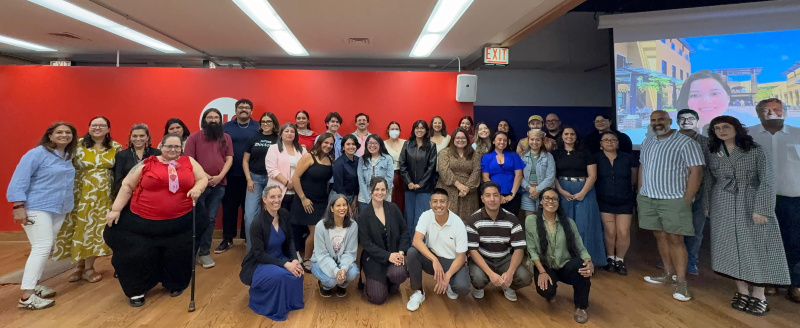
The program brings together an alliance of 26 Hispanic-Serving Institutions with an R1 research designation to connect doctoral students with the comparative research skills, intellectual breadth and critical thinking needed to move from coursework into dissertation research. Each year, fellows take part in an intense week-long Summer Institute of lectures, seminars and workshops with leading Latino/a/x Studies scholars. This is followed by a year of dissertation funding and a mentorship network that extends far beyond their home campus.
Recovering forgotten stories
Isabel Verduzco couldn’t make it to Chicago, so for the first days of the Summer Institute, she logged onto Zoom at 6:30 a.m. from her home in California, staying on for full eight-hour days of guest lectures and workshops. And yet, there were moments that broke through the distance. During a poetry reading one evening, she recalls how Dr. Olga Herrera, a staff member, turned her laptop around so Verduzco’s cohort could see her and wave hello. “It was a simple gesture, but it shattered the barriers of distance and made me feel truly connected and in community with my peers,” Verduzco shares.
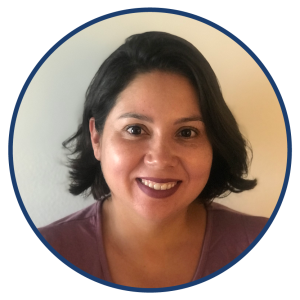
Community is a central focus of Verduzco’s research. Now a third-year history Ph.D. student, she was born in El Salvador during the country’s 12-year civil war. Despite this, her family rarely spoke about the war while she was growing up. “It is precisely that silence, and my deep desire to understand my family’s history and what happened during those 12 years, that led me to the study of history,” she says.
Her dissertation recovers the stories of ordinary Salvadoran women, both those who remained in the country navigating daily violence and those displaced to refugee camps along the Honduran border. Their reproductive care labor sustained families and communities but has remained largely invisible in the historical record.
At the Institute, conversations with other scholars encouraged Verduzco to look beyond official archives and consider the family histories and personal records that preserve these women’s experiences. As a fellow, she hopes to collaborate with UCI’s Génesis Lara, assistant professor of Chicano/Latino Studies, on an oral history project capturing and connecting families of the disappeared in El Salvador and the Dominican Republic.
For Verduzco, a first-generation college student and mother of two teenagers, the stakes of her research are deeply personal. “It is about becoming a resource for my children, opening doors to higher education and showing them what is possible, and equally, about breaking the silences of our Salvadoran history, so that they never have to grow up in the same silence that shaped my generation,” she says.
Mapping queer worldmaking across the Americas
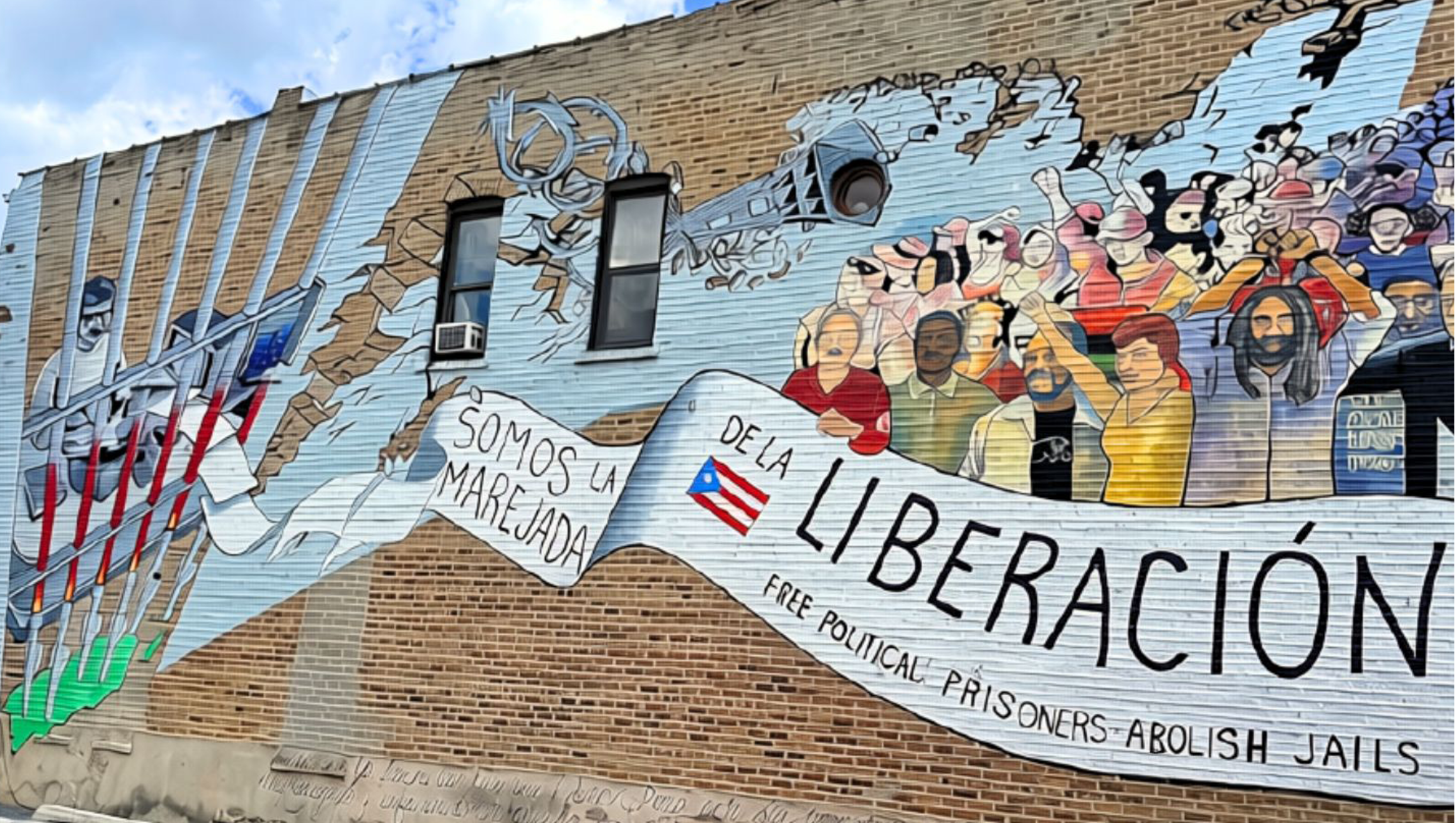
As part of the Summer Institute, Raúl Romo joined a guided tour of Barrio Borikén, a historic Puerto Rican enclave in Chicago, led by José E. López, a longtime community activist and co-founder of the Puerto Rican Cultural Center. Block by block, the group traced how a community had carved out space for itself. For Romo, whose research is grounded in spatial theory, the tour offered “a vivid example of the importance of placemaking for Latinx communities in the United States,” he says, “and it left a lasting mark on how I think about/with community and queer worldmaking.”
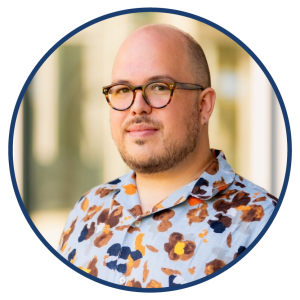
Romo, a Ph.D. candidate in Latin American and Iberian cultures, is working on a dissertation that maps strategies of queer worldmaking across Latin America, with particular focus on Mexico and the United States.
As a first-generation student who migrated from Mexico to pursue his studies, Romo says his personal background and migration history have deeply shaped how he approaches his research. “My work seeks to build bridges between both contexts, giving visibility to the strategies of community and joyful survival that queer Latiné communities continue to develop and project onto narrative,” he explains.
He credits conversations with Crossing Latinidades founders María de los Ángeles Torres and Amalia Pallares, along with presentations from visiting scholars, with helping him extend his methodological scope and enrich his theoretical frameworks. As a fellow, he’ll take part in the program’s Writing Lab as he transitions into full-time dissertation writing, with plans to conduct archival research at Princeton University and UT Austin over the coming year.
Tracing culture through underground networks
Julia Nava, a third-year Ph.D. student in film and media studies, is interested in a different gap in the historical record. Her research traces how digital technologies and internet piracy have enabled media access, transnational media exchange and diasporic community formations between Mexico and Los Angeles. She describes her work as an effort to “understand piracy beyond narrow legal understandings of stealing and reselling,” seeing it instead as a vital means of accessing culturally significant media across borders.
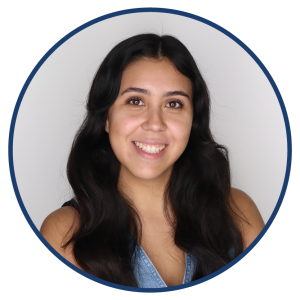
At the Summer Institute, Nava spent the week learning from scholars working on topics ranging from feminist and queer approaches to art and visual culture to desert and border studies. She and her cohort also visited museums and cultural landmarks around Chicago, engaging with community members equally invested in the field.
But it was the relationships built outside the seminar room – sharing meals after long workshop days and watching the World Cup with her cohort and faculty mentors – that she found most impactful.
“I have found lifelong friendships through this program and a supportive network of colleagues,” she says.
As a fellow, Nava will gain hands-on experience with fieldwork, archival analysis and publishing as a research assistant. She’s looking forward to the monthly writing workshops with her cohort, which are designed to demystify the writing and research process and prepare fellows for their qualifying exams and prospectus defense. The experience has already broadened the scope of her own project, helping to ground her work more firmly in Latinx Studies. “I plan to incorporate border studies more into my work in media studies and the ways in which I conceptualize transnational media,” Nava explains.
Supporting future scholars
After their fellowship year, Verduzco, Romo and Nava will remain part of a national network of Latino humanities scholars that will carry them through the rest of their careers. This is exactly the kind of support Crossing Latinidades was built to provide, and UCI’s own doctoral numbers already offer a promising sign: in 2024-25, Hispanic students earned roughly 15 percent of the doctorates conferred by the School of Humanities, well above the national rate of about 10 percent.
Over the coming year, the three will return to their dissertation research with new questions, connections and support from the Crossing Latinidades community. It’s work that they hope will help create opportunities for the Hispanic and Latino scholars who come next.
(Main image: Raúl Romo)
Interested in reading more from the School of Humanities? Sign up for our monthly newsletter.