
Seven scholars honored for teaching excellence
By Nikki Babri
Great teaching looks different in every classroom. This year, the UC Irvine School of Humanities recognizes seven scholars for embodying that range with its 2025-26 Teaching Excellence Awards. Nominated by their students and colleagues, these educators are honored for their outstanding pedagogy and commitment to shaping the next generation of scholars.
Senate Faculty Teaching Excellence Award
Theodore Martin and Philip Broadbent received the Senate Faculty Teaching Excellence Award for their lasting impact in the classroom.
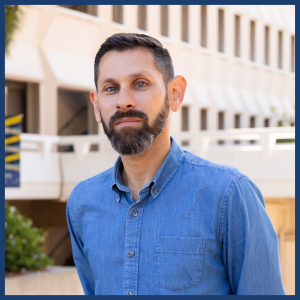
Associate Professor of English Theodore Martin has spent the past decade getting students excited about literature while grounding them in the historical contexts that shape it. As generative AI has reshaped that work, Martin has been candid about what’s been sacrificed along the way. In his writing seminars, he’s built workshops around collaboration, pushing students to brainstorm, write and revise together in class. “The intrusion of AI into our students’ everyday lives has given me a clear sense of my role as a teacher today,” Martin explains. “My aim is to get students to put down their screens and start cultivating practices of reading and writing on their own.”
This approach has made him one of the department’s most beloved teachers, with students calling his classes “riveting” and “memorable,” and praising the enthusiasm and patience he brings to every discussion. His mentorship extends well beyond the lecture hall, as one nominator reports that “graduate students flock to him.” Martin serves on over a dozen dissertation committees, has directed UCI’s UTeach program, previously served as the English Department’s vice chair and chair of undergraduate studies and is the faculty advisor for Echolalia, an undergraduate literary magazine started in his very own classroom.
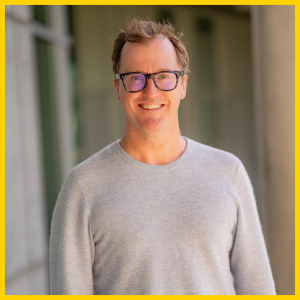
Philip Broadbent, assistant professor of teaching in European languages and studies, spent years as a lecturer in Humanities Core before taking over as director of the German language program in 2023. He overhauled the curriculum from the ground up, introducing new classes, redesigning coursework to be more interactive and building in more opportunities for students to practice German outside of class.
Broadbent centers discussion and debate in the classroom, encouraging students to test their interpretations against their peers. “I have seen how students learn to develop their own critical thinking skills and have the confidence to put those skills to the test in the classroom,” he says. “It is very rewarding to witness.”
Students describe Broadbent as engaging, approachable and organized while still holding them to high expectations. “He treats us like adults working together toward a common goal, making it enjoyable and easy to actually learn,” one student said. Broadbent has also built community within the German program as a whole, reviving the student-run German Club and launching a German Theater Lab where students collaborate on songs and performances.
Unit 18 Faculty Teaching Excellence Award
Giovanna Fogli and Katharine Walsh won the Unit 18 Faculty Teaching Excellence Award for fostering inclusive learning environments.
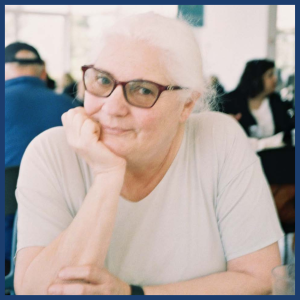
Giovanna Fogli, senior continuing lecturer in Humanities Core, has been teaching UCI students how to ask better questions of primary texts and of themselves for 25 years. Believing that learning hardly occurs without involved, active participation, she has employed a “guided heuristic method” using material like organizational charts and grids to provide structure for students. Her ultimate objective is to give students the tools to articulate what questions to ask, how to ask them and why it is important to ask them in the first place.
That approach has stayed with students long past the quarter’s end. In a teaching evaluation, one student wrote that Fogli “never did anything FOR me but rather gave me the guidance needed to do it myself and progress as a student and a writer.”
As AI tools have become part of the classroom conversation, Fogli has made a point of walking students through what is lost – namely, their own voice – when writing is outsourced to a language model. “Writing IS thinking,” she explains, “and the initial brainstorming in a writing project is an essential part of thinking.”
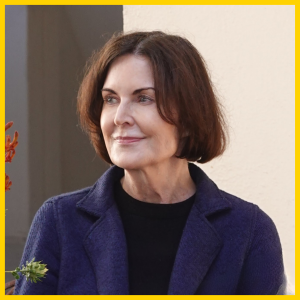
Katharine Walsh, senior continuing lecturer in Humanities Core, recognizes that students arrive to her classroom with different academic backgrounds and levels of preparation. “I strive to meet students where they are and not assume they have received the same educational foundation,” she shares. When she noticed students struggling to construct analytic thesis statements, she built in-class group workshops using both strong and flawed sample theses paired with guiding questions. Student feedback affirmed that the workshops helped them better understand assignment requirements and revise with more confidence, resulting in noticeably stronger rough drafts and final essays.
For Walsh, the clearest sign of the work’s value comes years later. She recalls a student she mentored on a Humanities Core research project in 2019. The student visited her shortly before graduating from UCI’s School of Law to thank her for the guidance and encouragement she had given him over the years. “There is nothing more rewarding than knowing I was able to have a positive impact on a student and their educational experience,” she says.
Pedagogical Innovation and Development Award
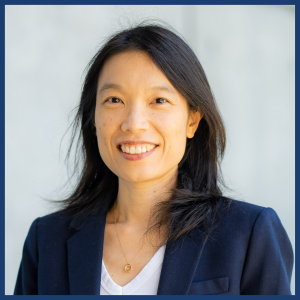
Jung-Hsien Lin, assistant director of the Program in Global Languages and Cultures, received the Pedagogical Innovation and Development Award for expanding how students learn, communicate and demonstrate knowledge. As a multilingual learner and writer herself, Lin has long thought of language as one medium among many through which people make meaning.
That philosophy informs her integration of virtual reality, multimodal composition and intercultural communication across her courses, where VR functions as a medium for cultural inquiry rather than a supplemental tool. One student described their experience with immersive technology as redefining what “presence” even means, since connection came through social interaction instead of being in a physical space.
Lin’s approach recently earned the School of Humanities a $90,000 grant to bring an AI-powered virtual reality language platform to UCI. “Human-centered education is not defined by the absence of technology,” Lin says. “It is defined by our ability to help students use technology thoughtfully while remaining connected to themselves and others.” For Lin, this is part of why the humanities matter more, not less, in the age of AI.
SOH Mentoring Excellence Award
Dorothy Fujita-Rony and Jessica Millward received the Mentoring Excellence Award for their sustained mentorship that supports the whole student.
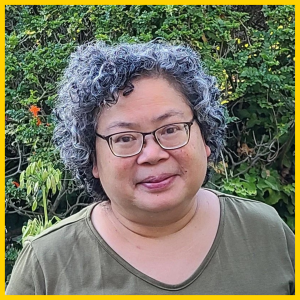
Now entering her 32nd year at UCI, Professor of Asian American Studies Dorothy Fujita-Rony traces her mentorship approach to the political activists and teachers she worked with in the 1980s and 1990s. “I learned that it was paramount to consider future generations and to support them in their efforts to make the world a better place,” she recalls.
Her mentoring philosophy is built on the conviction that scholars, especially those from communities historically underrepresented in the academy, thrive not in isolation but in community. “Connection in a community setting is one of the biggest resources we can give to our students,” Fujita-Rony says.
Her seminars, dubbed “critical reading and eating” groups, consist of shared meals and texts to connect students to one another and to a shared intellectual endeavor. Her investment in the whole person has helped students weather some of their hardest moments, professional and personal. “When I might otherwise fall through the cracks,” one former student wrote, “Professor Fujita-Rony ensured that I would not only survive but thrive as a scholar.” In turn, many of her students have become mentors who carry her example into their own classrooms.
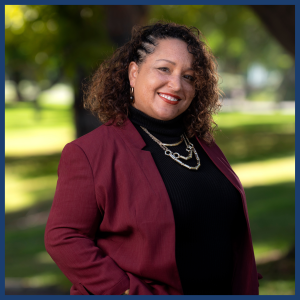
Jessica Millward, associate professor of history, has spent 18 years at UCI working to bring first-generation students and women of color into the historical profession. Within her first year on campus, she helped co-found an artistic exchange program with the University of Ghana and has since organized major academic symposia and taken on formal mentoring roles across the School of Humanities. Most recently, her status as a campus leader was recognized through her appointment as the Associate Director for the Center for Liberation, Anti-Racism, and Belonging (C-LAB).
“Sustained mentorship” is the phrase that comes up repeatedly among those she has mentored. “She is invested in me as a human being,” shared a former teaching assistant. Mentees describe her as a steady presence long after graduation and across institutions, helping to secure prestigious fellowships and postdoctoral opportunities while offering guidance through career transitions, job searches and personal setbacks.
“In a sense you can say that my mentoring has been worldwide,” Millward reflects, crediting the network of students, colleagues and collaborators across the UC system and beyond who make that reach possible.
Congratulations to this year’s Teaching Excellence Award recipients for their extraordinary dedication to students and to the future of the humanities at UC Irvine.
Interested in reading more from the School of Humanities? Sign up for our monthly newsletter.